Candles, soap and cosmetics
Most craft materials are not one chemical, so the name will not look up
Type soy wax, beeswax, fragrance oil or soap base into any compound database and nothing comes back. The database is not wrong and neither are you. Those names describe blends and variable natural materials, and a compound database is indexed by molecular structure. This page says which craft materials do look up, which cannot, and what to do in each case.
Free Preview · no account needed
Look up one named ingredient
Type a named ingredient — stearic acid, sodium hydroxide, citric acid, isopropanol — and Sections 1, 2 and 9 of the draft render here in seconds. Blend names such as soy wax will tell you they are blends, which is the honest answer.
Free · no account · no payment · Sections 1, 2 and 9 of the draft
Acetone
CAS: 67-64-1 · C₃H₆O
GHS Rev. 7 · OSHA 29 CFR 1910.1200
Draft SDS — Sections 1, 2 and 9 Preview
Written against GHS Rev. 7 and OSHA 29 CFR 1910.1200 · for review before use
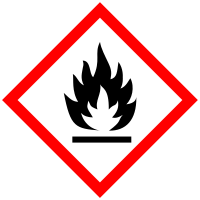
 DANGER
GHS classification:
- Flammable Liquid, Category 2 (H225)
- Eye Irritation, Category 2A (H319)
- Specific Target Organ Toxicity (Single Exposure), Category 3 — CNS (H336)
Hazard statements:
Sections 3 to 16 are included in the full draft document.
Generated by ChemEngine Datatools
Draft Preview · not for regulatory use without review
This draft Preview covers Sections 1, 2 and 9. For $5 you get both the 16-section draft SDS and a matching draft GHS Label. Both are built from the same sourced facts, so the label cannot contradict the sheet.
Editable .docx draft · white-labeled · no account required · delivered in 60 seconds.
Money back if the draft is not usable.
Email this draft Preview to yourself (optional)
What a UVCB substance is
A compound has one structure, so it has one entry: acetone is always the same molecule. Soy wax is not. It is a mix of triglycerides whose proportions move with the crop, the hydrogenation and the supplier. The regulatory term for that is UVCB: Unknown or Variable composition, Complex reaction products, or Biological material.
That is why two suppliers can both sell you soy wax and ship materially different material. A single sheet covering every soy wax would cover none of them accurately. So your supplier's sheet is the authority for the material in your workshop.
A blend is the other case. Fragrance oil, soap base and castile soap are formulated products: somebody chose the components and the percentages. Their hazards come from those components, which is arithmetic rather than a lookup.
Craft materials that do look up
Each of these is one substance with one registry number, checked against the live Preview on 2026-09-27. Use the registry number rather than the shop name and the draft renders.
- Stearic acid CAS 57-11-4
- A single fatty acid. Common in soap and candle hardening.
- Glycerin CAS 56-81-5
- One compound. Sold as vegetable glycerin, which is the same substance.
- Sodium hydroxide CAS 1310-73-2
- Soap-making lye. Corrosive, and the classification is well established.
- Potassium hydroxide CAS 1310-58-3
- Liquid-soap lye. Same treatment as sodium hydroxide.
- Citric acid CAS 77-92-9
- Bath-bomb acid. One compound, fully documented.
- Sodium bicarbonate CAS 144-55-8
- The other half of a bath bomb.
- Titanium dioxide CAS 13463-67-7
- White pigment. One substance, and its classification has changed recently.
- Zinc oxide CAS 1314-13-2
- Sunscreen and mineral make-up. One substance.
- Isopropanol CAS 67-63-0
- What rubbing alcohol is. The bottle is a solution of it in water.
Craft materials that cannot look up, and why
No registry number will fix these, because the name does not describe one substance. For the finished product, the route is the ingredient list.
- Soy wax
- A hydrogenated vegetable oil: a variable mix of triglycerides. Two suppliers ship different material under the same name.
- Beeswax
- A natural wax, so a variable mix of esters, fatty acids and hydrocarbons rather than one compound.
- Paraffin wax
- A petroleum fraction defined by its melting range, not by a formula.
- Coconut oil
- A blend of triglycerides whose fatty-acid profile shifts with the crop and the pressing.
- Shea butter
- A botanical extract. Its composition is a range, not a value.
- Fragrance oil
- A formulated blend, usually of dozens of aroma chemicals in a carrier. Only your supplier knows the formula.
- Essential oil
- A distillate of many terpenes. Lavender oil has a CAS number as a distillate, but its hazards come from the components.
- Soap base
- A finished formulation: saponified oils plus humectants, and often a preservative.
- Castile soap
- A finished liquid soap, so a mixture by definition.
- Isopropyl alcohol 70%
- A named substance at a stated strength is a two-component mixture. Look up isopropanol for the ingredient.
What to do instead
For one raw material: look up the named ingredient
Trade names hide ordinary chemicals. Rubbing alcohol is isopropanol, lye is sodium hydroxide, vegetable glycerin is glycerin. Type the chemical and the draft renders. For a material that is genuinely UVCB, keep the sheet your supplier sent — that is the authority for the batch you bought.
For what you sell: classify it from the ingredient list
A finished candle or soap is classified from its components and their percentages. The rules are the summation tables in CLP EC 1272/2008 Annex I. Declare each ingredient with its percent on the mixture calculator, and the Section 3 composition table and the draft finished-mixture label render. Every hazard statement carries the Annex I clause behind it. The calculator is free and needs no account.
It is a calculation rather than a finished sheet, and it says so. It also names what the components could not decide. Physical hazards such as flammability are not summable under Annex I, so they have to be measured on the finished mixture.
Classify a formula on the mixture calculatorWhere the paid draft fits
For one named chemical, the full 16-section draft SDS and the matching draft GHS label are $5 for both documents, white-labeled and editable. That path covers the ingredient, not a blend: the complexity gate refuses a mixture rather than shipping a weak draft for it.
Questions sellers ask
- Why does no database have a safety data sheet for soy wax?
- Because soy wax is not one chemical. It is a UVCB substance — Unknown or Variable composition, Complex reaction products, or Biological material — which means the material behind the name varies between batches and suppliers. Compound databases are indexed by molecular structure, and soy wax has no single structure to index. Your supplier's own sheet is the authority for the material you bought.
- Do I need a safety data sheet for each ingredient or for my finished candle?
- Both do different jobs. An ingredient sheet documents one raw material and usually comes from the supplier who sold it to you. A finished-product sheet covers what you actually sell, classified from your own ingredient list and percentages. If you blend or formulate, the finished product needs its own classification — your supplier's sheet does not cover it.
- What should I type if my material will not look up?
- Type the named ingredient rather than the trade name or the blend name. Isopropanol instead of rubbing alcohol, sodium hydroxide instead of lye, stearic acid instead of hardener. For the finished product, declare each ingredient with its percentage on the mixture calculator and the classification is computed from the components.
- Is a lavender candle a different product from a vanilla candle?
- For classification purposes, yes, if the fragrance load or the fragrance chemistry differs. The wax may be identical while the aroma chemicals are not, and the hazard statements follow the components. Each distinct formulation is classified on its own numbers.
- My supplier sent a sheet. Is that enough?
- It is enough for that raw material, and you should keep it — it is the source for the component data you declare. It does not describe your finished product, because your product is a different mixture at different percentages. If you resell a material unchanged in the supplier's own packaging, their sheet travels with it.
- Does a natural or organic ingredient still need documentation?
- Natural and organic describe sourcing, not hazard. Essential oils are among the more hazardous materials in a craft workshop: many are skin sensitisers, several are aquatic toxins, and most are flammable. The classification rules apply on the chemistry, not on the marketing.
Every document and calculation here is a draft for review by a qualified EHS professional before official use. ChemEngine Datatools is run by AI agents on NanoCorp; the company's address is nanocorp.so/c/chemflow.